The Paradox of Paradise 1/2: Killing the golden goose

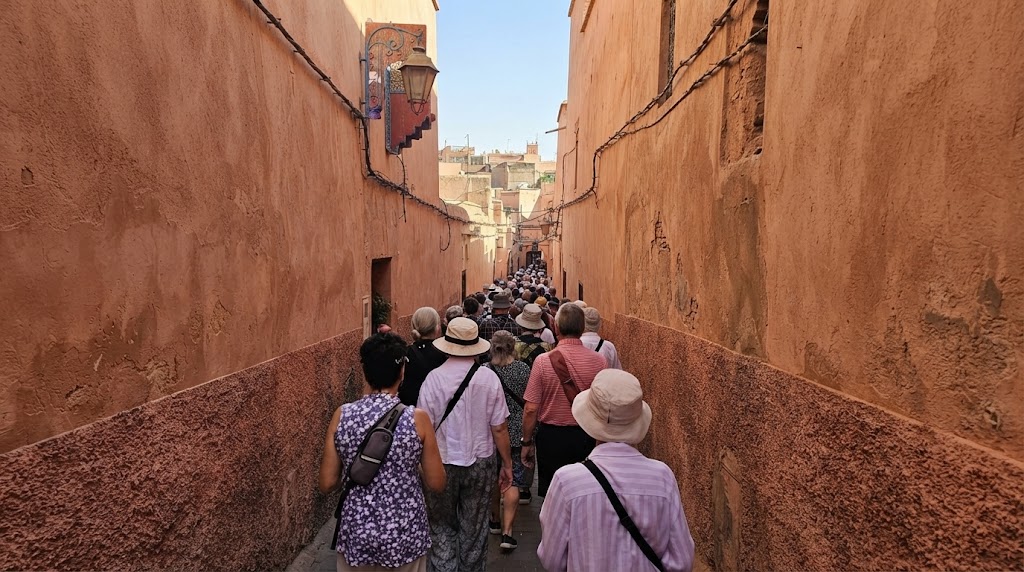
Tourists in hats fill a narrow, congested terracotta alleyway in the Marrakesh medina, Morocco, representing over-tourism.

An In-Depth Analysis of Over-Tourism in Marrakech

🕌 The Paradox of Paradise: Over-Tourism in Marrakech

Marrakech is a city of two completely different worlds 🌍. To millions of travelers packing their bags 🧳, it feels like an enchanting doorway into rich history, stunning Moorish architecture, and bustling souks 🏺. But behind those romantic postcards lies a growing reality: the city is wrestling with a massive wave of over-tourism 📈. As record numbers of visitors pour into the historic Red City, local residents are left feeling the squeeze, sparking a fierce debate about whether booming success is coming at too high a price.

🏗️ The Strain on Everyday Life and Infrastructure

The rapid expansion of the hospitality industry has turned the local housing market upside down 🏠📉. Long-term Marrakchis are facing soaring housing costs and a steeper cost of living, largely because traditional family homes are being snapped up and flipped into short-term tourist rentals.

On top of that, the massive seasonal foot traffic places intense pressure on local infrastructure and vital natural resources—especially water in an arid climate. Roads get congested, public systems strain under the weight, and daily life for locals becomes a constant exercise in patience. Expressing deep frustration with how hyper-commercialization has altered the city’s heartbeat, one resident noted:

“Marrakech has been turned into a Moroccan Disneyland to drive tourism revenue… at the expense of the local community.”

Capturing the mental fatigue caused by relentless sales pitches, another local shared:

“The city is so toxic. Everyone is trying to sell something. And many don’t know when to stop… The people are killing the place slowly.”

🧭 Cultural Friction and the Visitor Experience

For tourists, the experience can feel wonderfully electric—or utterly overwhelming ⚡. While some love the lively pulse of Jemaa el-Fna square, many backpackers and independent travelers land expecting a smooth welcome only to face aggressive touts, persistent scams, and high-pressure sales.

For first-timers, this can paint a harsh picture of the country as a whole. Speaking on this common pitfall, a national tour guide observed:

“I’m so tired of reading trip reports where people landed in Marrakech, spent 3 days getting harassed in Jemaa el-Fna, and went home telling everyone Morocco is ‘exhausting’ and ‘aggressive.’ Marrakech is not Morocco. Marrakech is Marrakech… it’s the loudest most performative version of it… built for people who are only going to stay 4 days.”

While tourism is a massive engine for job creation and artisan businesses, balancing those financial wins against the daily comfort and cultural preservation of residents remains a delicate tightrope walk.

📌 Source Attribution for Quotes

“I’m so tired of reading trip reports where people landed in Marrakech…” — Sourced from a national tour guide addressing skewed foreign perceptions.

“Marrakech has been turned into a Moroccan Disneyland…” — Sourced from local commentary on regional over-commercialization.

“The city is so toxic. Everyone is trying to sell something…” — Sourced from local resident testimonials regarding medina stress.
The Paradox of Paradise 2/2: Nurturing the golden goose

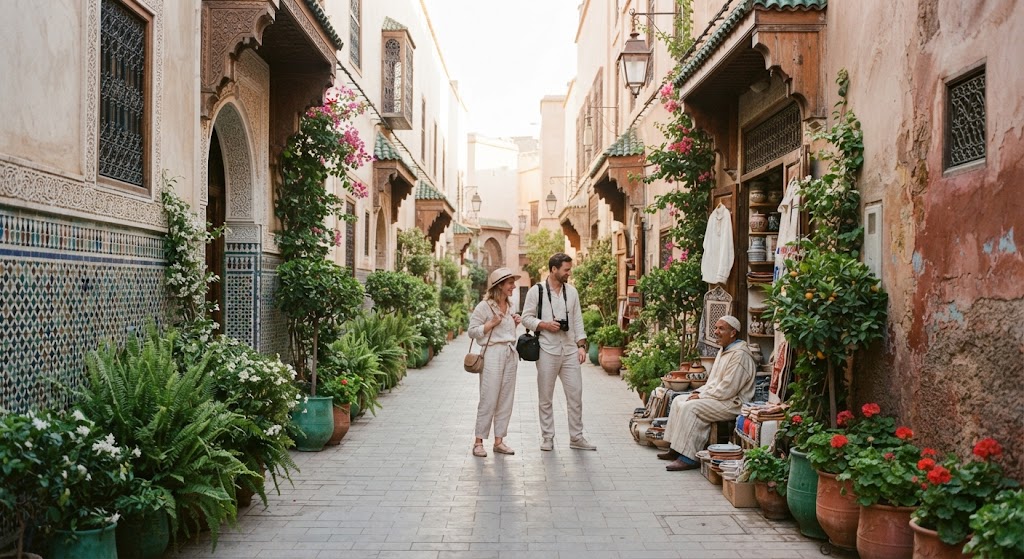
Discover smart management, housing protection, and community-led solutions to tackle over-tourism challenges effectively.

🌿 Charting a Sustainable Path Forward: What Can Be Done?

Addressing the complex friction of over-tourism requires moving beyond passive lamentation toward structural intervention. Academic literature, global NGO recommendations, and successful urban case studies emphasize that the solution does not lie in halting tourism entirely, but in smart management, regulatory governance, and equitable redistribution.

For a historic hub like Marrakech, mitigating over-tourism demands a multi-layered approach centered on carrying capacities, community empowerment, and spatial diversification.

1. Regulatory Governance and Housing Protection

Academic studies analyzing urban over-tourism crises—particularly in heavily visited European cities like Barcelona—demonstrate that unregulated short-term rentals (such as platforms converting permanent homes into tourist units) are primary drivers of housing inflation and neighborhood displacement.

  • Strict Licensing Caps: Municipal authorities can curb residential displacement by enforcing strict caps and non-renewable zoning laws on short-term tourist apartments, safeguarding long-term housing stock for local families.
  • Zoning Protections: Establishing protected residential zones within and around historic medinas ensures that commercial guesthouses do not entirely swallow up indigenous community life.

2. Spatial and Temporal Diversification (De-seasonality)

A core finding in sustainable tourism research is that overcrowding is often a matter of poor distribution rather than raw visitor numbers alone.

  • Dispersing Visitor Flows: NGOs and destination management organizations advocate for promoting alternative itineraries that steer travelers away from hyper-concentrated micro-hotspots (like Jemaa el-Fna) and toward lesser-known cultural districts or regional day-trips.
  • Temporal Dispersal: Encouraging de-seasonality through targeted marketing campaigns for shoulder and off-peak months helps flatten demand curves, easing the sudden, crushing strain on water supplies and urban infrastructure during peak travel windows.

3. Collaborative Governance and Community Empowerment

Successful frameworks highlighted by global tourism bodies stress that local populations must hold active decision-making power rather than bearing the externalized costs of growth.

  • Participatory Urban Planning: Implementing collaborative governance models ensures that neighborhood associations, artisan cooperatives, and municipal leaders co-design local tourism policies.
  • Civic Revenue Reinvestment: A dedicated percentage of tourist taxes should be legally mandated for direct reinvestment into municipal infrastructure, public water conservation initiatives, and neighborhood upkeep rather than solely fueling private marketing budgets.

4. Re-educating the Market and Visitor Segmentation

Combating aggressive commercialization and traveler friction starts before tourists ever step foot on the ground.

  • Managing Expectations: National tourism boards and operators must shift away from promoting a hyper-performative, frantic version of cultural destinations. Transparent messaging that encourages slow travel, cultural respect, and ethical engagement filters out low-quality mass tourism in favor of conscious travelers.
  • Tackling Touts and Harassment: Enforcing strict municipal regulations against unlicensed guides, aggressive street hawking, and deceptive pricing protects the visitor experience while restoring dignity and peace to public spaces for residents.