
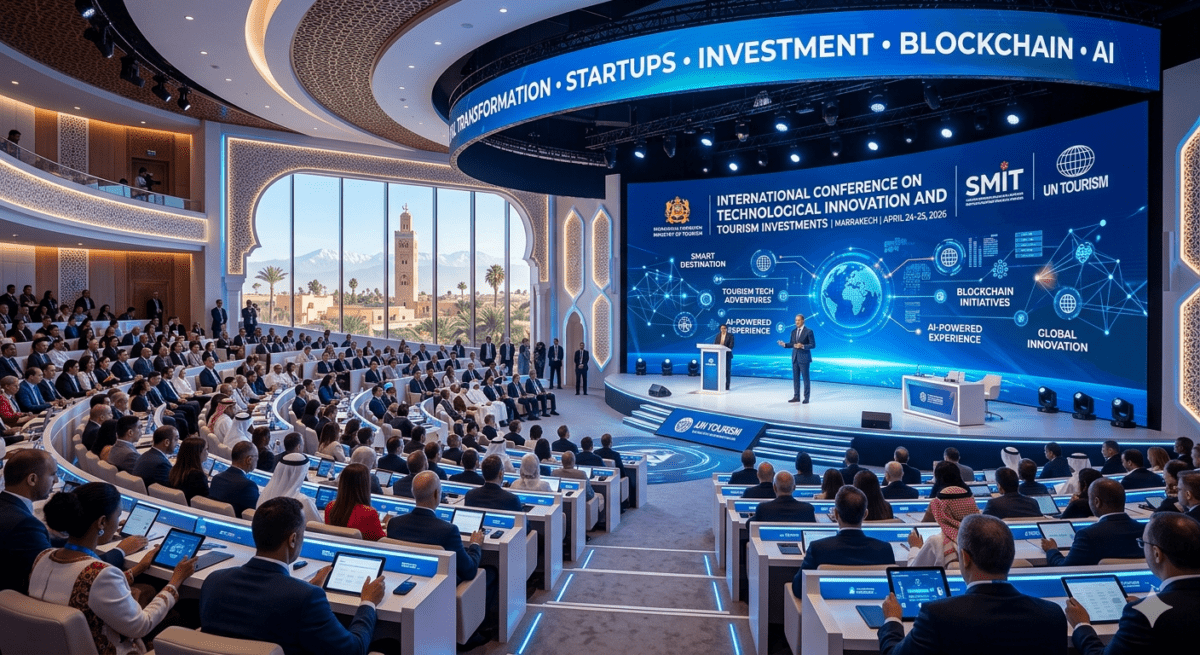
The International Conference on Technological Innovation and Tourism Investments, held in Marrakech from April 24–25, 2026, represents a watershed moment for the African and global tourism sectors. Co-organized by the Moroccan Ministry of Tourism, the Moroccan Agency for Tourism Development (SMIT), and UN Tourism, the summit transformed the “Ochre City” into a global laboratory for the future of travel.
The event’s core mission was to bridge the gap between traditional tourism infrastructure and the rapid evolution of the “Digital Age,” specifically focusing on how Blockchain, Artificial Intelligence (AI), and Decentralized Finance (DeFi) can democratize investment and enhance the traveller experience.
1. A Strategic Vision: Digital Transformation
The conference opened with a clear mandate from Moroccan officials and UN Tourism leadership: tourism must evolve from a service-based industry into a technology-driven ecosystem. As Morocco prepares to co-host the 2030 FIFA World Cup, the government is leveraging these summits to position the country as a “Smart Destination.”
A primary theme was the integration of Blockchain technology to solve long-standing industry pain points. Speakers highlighted how blockchain could:
- Streamline Payments: Reducing high commission fees from traditional banks and intermediaries through stablecoins and smart contracts.
- Identity Management: Implementing secure, decentralized digital IDs to expedite airport processing and hotel check-ins.
- Supply Chain Transparency: Allowing eco-conscious travelers to verify the “green” credentials of hotels and local suppliers through immutable digital ledgers.
2. The “Tourism Tech Adventures” Startup Spotlight
A highlight of the summit was the UN Tourism Tech Adventures competition. This segment was designed to provide a platform for startups that are redefining the “Customer Journey.” Over 200 startups applied, with finalists pitching solutions that ranged from:
- Hyper-Personalized AI Concierges: Bots that use predictive analytics to curate itineraries based on real-time mood and local event data.
- Virtual Reality (VR) Pre-Trips: Platforms allowing investors and tourists to “walk through” planned developments or heritage sites before they are built or visited.
- Tokenized Real Estate: Blockchain-based models that allow small-scale investors to buy “fractions” of luxury hotel developments, traditionally reserved for institutional giants.
3. Fostering Investment in a New Era
The “Investment” pillar of the conference focused on the shifting landscape of capital. SMIT emphasized that for Morocco to reach its goal of 26 million tourists by 2030, investment must move beyond “brick and mortar” into Agri-Tourism and Eco-Tech.
Key panels discussed the rise of Impact Investing, where capital is deployed specifically into startups that support local Moroccan cooperatives. By using blockchain-based tracking, investors can see exactly how their funds support rural infrastructure, creating a “Circle of Trust” that attracts international ESG (Environmental, Social, and Governance) funds.
4. Marrakech as a Hub for Digital Nomadism
The summit also addressed the growing trend of Digital Nomads. With the rise of remote work, Marrakech is positioning itself not just as a weekend getaway, but as a long-term hub for tech talent. Discussions focused on the “Digital Nomad Visa” and the infrastructure needed—high-speed 5G, co-working spaces, and tech-friendly banking—to support a workforce that lives and works on the move.
5. Challenges and the Road to 2030
Despite the optimism, the conference did not shy away from challenges. Experts noted that while Blockchain offers security, the “Digital Divide” remains a hurdle. For technology to truly transform tourism, it must be inclusive. This means ensuring that a small guesthouse in the Atlas Mountains has the same access to digital payment tools and AI-driven marketing as a five-star resort in Marrakech.
The summit concluded with the “Marrakech Declaration on Tourism Innovation,” a commitment by participating nations to harmonize digital regulations and support a cross-border “innovation corridor” between Africa and Europe.
Conclusion
The 2026 International Conference on Technological Innovation and Tourism Investments was more than a networking event; it was a roadmap. By placing Blockchain and AI at the center of the conversation, Marrakech has signaled its intent to lead the next generation of global tourism—one that is smarter, more transparent, and deeply integrated with the digital economy.