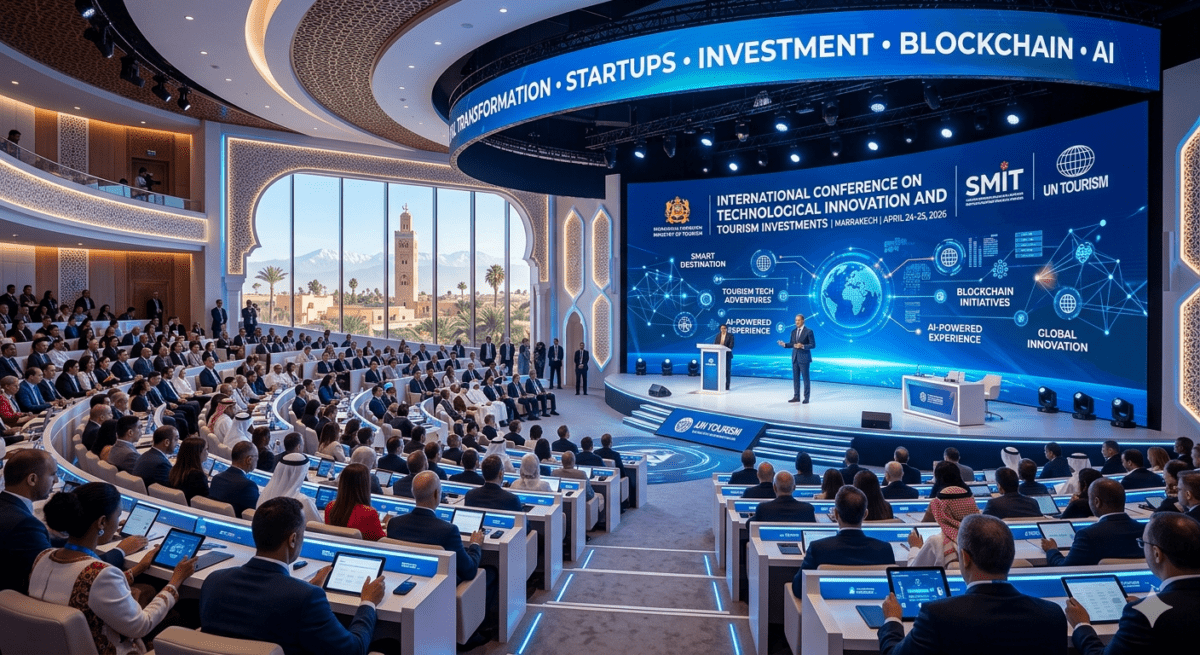
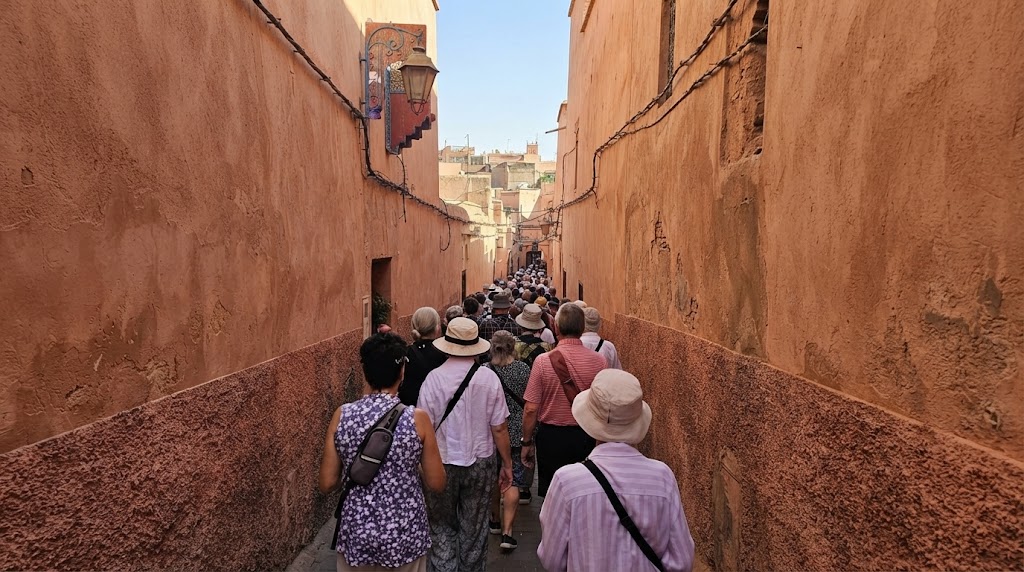
Marrakech 2026, Digital Oasis Where Blockchain Meets the Future of Travel

The International Conference on Technological Innovation and Tourism Investments, held in Marrakech from April 24–25, 2026, represents a watershed moment for the African and global tourism sectors. Co-organized by the Moroccan Ministry of Tourism, the Moroccan Agency for Tourism Development (SMIT), and UN Tourism, the summit transformed the “Ochre City” into a global laboratory for the future of travel.

The event’s core mission was to bridge the gap between traditional tourism infrastructure and the rapid evolution of the “Digital Age,” specifically focusing on how Blockchain, Artificial Intelligence (AI), and Decentralized Finance (DeFi) can democratize investment and enhance the traveller experience.

1. A Strategic Vision: Digital Transformation

The conference opened with a clear mandate from Moroccan officials and UN Tourism leadership: tourism must evolve from a service-based industry into a technology-driven ecosystem. As Morocco prepares to co-host the 2030 FIFA World Cup, the government is leveraging these summits to position the country as a “Smart Destination.”

A primary theme was the integration of Blockchain technology to solve long-standing industry pain points. Speakers highlighted how blockchain could:

  • Streamline Payments: Reducing high commission fees from traditional banks and intermediaries through stablecoins and smart contracts.
  • Identity Management: Implementing secure, decentralized digital IDs to expedite airport processing and hotel check-ins.
  • Supply Chain Transparency: Allowing eco-conscious travelers to verify the “green” credentials of hotels and local suppliers through immutable digital ledgers.

2. The “Tourism Tech Adventures” Startup Spotlight

A highlight of the summit was the UN Tourism Tech Adventures competition. This segment was designed to provide a platform for startups that are redefining the “Customer Journey.” Over 200 startups applied, with finalists pitching solutions that ranged from:

  • Hyper-Personalized AI Concierges: Bots that use predictive analytics to curate itineraries based on real-time mood and local event data.
  • Virtual Reality (VR) Pre-Trips: Platforms allowing investors and tourists to “walk through” planned developments or heritage sites before they are built or visited.
  • Tokenized Real Estate: Blockchain-based models that allow small-scale investors to buy “fractions” of luxury hotel developments, traditionally reserved for institutional giants.

3. Fostering Investment in a New Era

The “Investment” pillar of the conference focused on the shifting landscape of capital. SMIT emphasized that for Morocco to reach its goal of 26 million tourists by 2030, investment must move beyond “brick and mortar” into Agri-Tourism and Eco-Tech.

Key panels discussed the rise of Impact Investing, where capital is deployed specifically into startups that support local Moroccan cooperatives. By using blockchain-based tracking, investors can see exactly how their funds support rural infrastructure, creating a “Circle of Trust” that attracts international ESG (Environmental, Social, and Governance) funds.

4. Marrakech as a Hub for Digital Nomadism

The summit also addressed the growing trend of Digital Nomads. With the rise of remote work, Marrakech is positioning itself not just as a weekend getaway, but as a long-term hub for tech talent. Discussions focused on the “Digital Nomad Visa” and the infrastructure needed—high-speed 5G, co-working spaces, and tech-friendly banking—to support a workforce that lives and works on the move.

5. Challenges and the Road to 2030

Despite the optimism, the conference did not shy away from challenges. Experts noted that while Blockchain offers security, the “Digital Divide” remains a hurdle. For technology to truly transform tourism, it must be inclusive. This means ensuring that a small guesthouse in the Atlas Mountains has the same access to digital payment tools and AI-driven marketing as a five-star resort in Marrakech.

The summit concluded with the “Marrakech Declaration on Tourism Innovation,” a commitment by participating nations to harmonize digital regulations and support a cross-border “innovation corridor” between Africa and Europe.

Conclusion

The 2026 International Conference on Technological Innovation and Tourism Investments was more than a networking event; it was a roadmap. By placing Blockchain and AI at the center of the conversation, Marrakech has signaled its intent to lead the next generation of global tourism—one that is smarter, more transparent, and deeply integrated with the digital economy.

Airline Tax Threat to Moroccan Tourism in 2025?

Airline Tax Threats to Moroccan Tourism in 2025?

Morocco-based French tourism operators worried

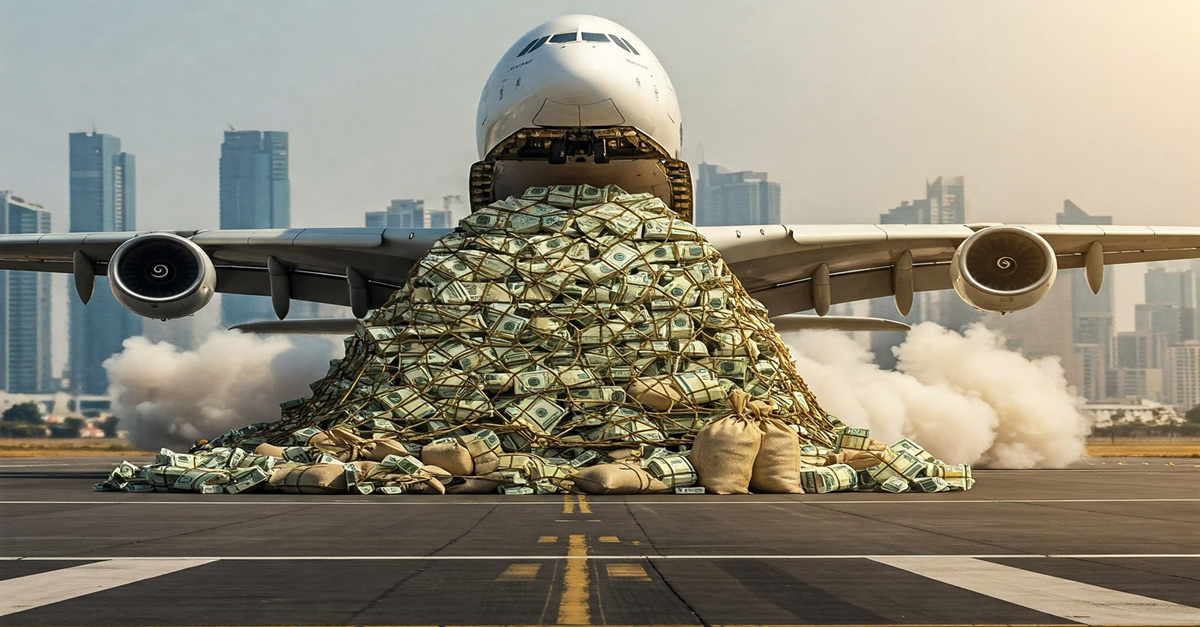
While the tourism sector is on cloud nine, with record figures in 2024 and the first quarter of 2025, it could be in for a downturn for the rest of the year, particularly due to the loss of a significant portion of French customers, the leading country in terms of arrivals. This decline affects not only the French market, but might also affect other segments, following the French government’s decision to increase its TSBA solidarity tax on airline tickets (Taxe de Solidarité sur les Billets d’Avion)  to the detriment of foreign tourist destinations.

It is with great regret that Ryanair announced the cancellation of its two routes between Marrakech and Porto, Portugal. This decision follows the doubling of airport taxes in France starting in March, unlike other European countries, which are instead seeking to reduce them. The lack of common legislation on the matter within the European Union makes these tax disparities even more problematic.

This situation also worries French tour operators, who schedule charter flights to Morocco and are already seeing their revenues plummet. Moroccan hotels, which largely depend on this clientele attracted by affordable stays, are also likely to suffer. The future of the sector will depend on the evolution of this tax decision and any potential compensation measures that could be implemented to mitigate its impact.

Translated and adapted from actu-maroc.com/menaces-sur-le-tourisme-marocain-en-2025/ by fulbridge.com, BBA Morocco member

Background:

Key Developments:

Increased “Solidarity Tax” (TSBA):

The French government has moved forward with substantial increases to the “Solidarity Tax” applied to airline tickets. This tax, designed to generate revenue, has seen a sharp rise in rates across various flight distances and travel classes. These increases went into effect on March 1st, 2025.  

Varying Tax Rates:

The tax increase is not uniform. It varies significantly based on:

  • Flight distance (domestic, intra-European, mid-haul, long-haul).  
  • Travel class (economy, premium economy, business, first class).  
  • This means that those travelling in business and first class on long-haul flights will bear the heaviest burden.  

Impact on Private Jets:

In addition to commercial flights, France has also introduced a new passenger tax specifically targeting private jet flights. This measure is designed to increase revenue from private aviation.  

This tax is also tiered, depending on distance flown, and the type of private aircraft used.  

Retroactive Charges:

Some airlines, most notably Transavia, have implemented surcharges on tickets that were purchased before the new tax went into effect. This has caused frustration among consumers.

It is important to notice that not all airlines have taken this action.

Economic Impact:

The French government anticipates generating a significant amount of additional revenue from these tax increases. However, the aviation industry expresses concerns about the potential negative impacts on:

  • Airline competitiveness.
  • Regional airport viability.
  • Tourism.
  • Job losses.
  • Industry Concerns:

Competitiveness:

Airlines argue that these taxes will make French airports less competitive compared to other European hubs.

Regional Impact:

There are fears that the increased taxes will disproportionately affect regional airports, potentially leading to reduced connectivity.  

Consumer Impact:

Passengers will face higher ticket prices, which could deter travel.  

Lack of Consultation:

A large complaint from transport unions is that the tax increases have been implemented without proper consultation or impact studies.  

Environmental Reasoning:

The French government has stated that part of the reasoning behind the tax increases is to help with environmental concerns. However, the aviation industry has pushed back on this, and argued that this will harm the industry.  

The situation is evolving, and the long-term effects of these new taxes remain to be seen.

Overblown threat? A historic look at the UK’s APD

“The Air Passenger Duty (APD), for instance, is a common tax included on an air ticket for travellers flying from the UK[.] Since its introduction in 1994, APD has been a pivotal measure aimed at generating revenue for the UK government while pushing individuals to consider the environmental implications of their travel choices. This tax has incited extensive debate, as various stakeholders present compelling arguments for and against its continued implementation. “

A University of Hertfordshire study on the subject highlights the varying impact of the APD:

Short-haul trips: Tourist demand is inelastic for APD below £37.505. As the current APD rate ranges from £13 to £26 for short-haul trips, it has a limited effect on tourist demand.

Medium- and long-haul trips: The current APD rate is more than £75, which is more than the critical value of £52.505, above which the tourist demand becomes highly elastic. This confirms that the current APD rate for medium- and long-haul trips may deter tourists from travelling overseas.

An Airline UK report would suggest:

Short-haul and Long-haul: APD increases ticket prices, which dampens demand and negatively impacts connectivity at UK airports.

Ticket Prices: APD represents, on average, about 16% of ticket prices for short-haul destinations and 18% for long-haul destinations. This increases to 27% and 26% respectively during off-peak periods.

Further reading

Why Are Travel Costs Soaring Experts Explain The Global Impact On Tourism In 2025

Tourist Taxes Part Two Their Impact On The Aviation Industry

How the tax system distorts the travel industry

United Kingdom Air Passenger Duty (APD) and the impact on travel and tourism

Want to read more news about Business in Morocco? Join us